Discontinued, or sixteen weeks out from one supplier.
The machine is fine. The part that wears is the one nobody stocks any more — or the manufacturer is gone, or the lead time is longer than your season, or the only quote you can get is absurd.
Send me the part, or what’s left of it
A worn one still carries the geometry that matters. A broken one usually does too. If it’s bolted to something, I’ll come to it.
I scan it and model it
Most machines have no drawings anywhere. Scanning what surrounds the part is how a mount gets made to fit the first time instead of the third.
You get something a shop can make
Or something I can have made for you. It does not have to be identical to the original. It has to fit, and it has to last longer than the one that failed.
A conveyor rod nobody could source
A hatchery conveyor was running on a bent stainless rod that no longer existed as a catalogue part. I drew it from the one sample left on the belt and had a batch made. The genuine item did turn up eventually — at three times what ours cost.
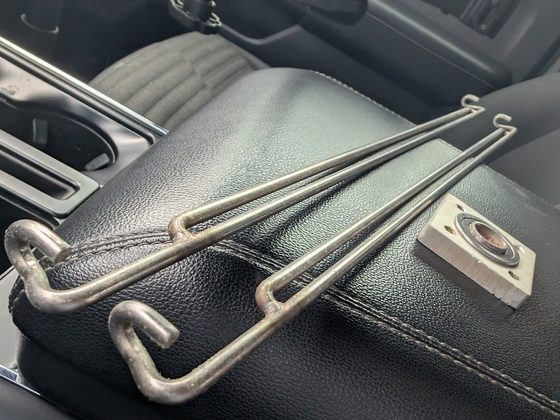 The rod, drawn from a sample
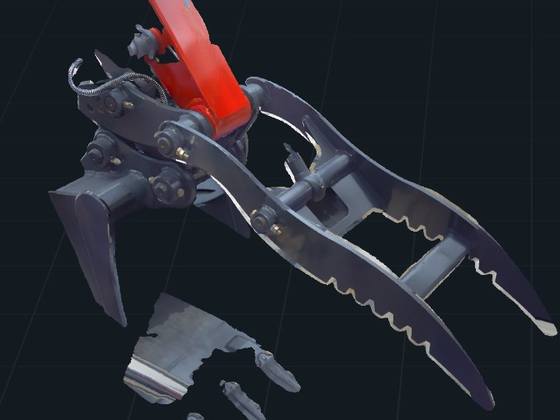 Scanned, because nothing was drawn
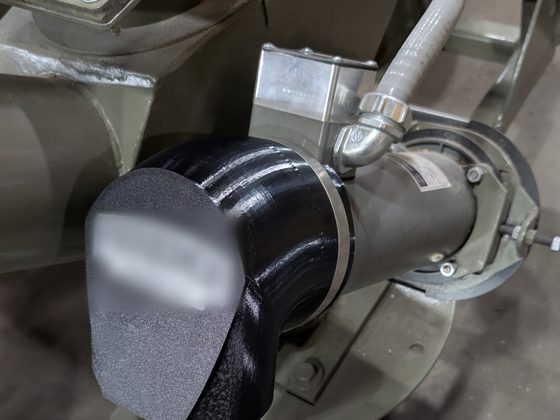 Printed, because it suited the part
You own the drawing afterwards
Next time that part wears out you order it from whoever you like, in whatever quantity suits you. That machine never holds you hostage on that part again — and if the original failed because it was under-built, that’s the moment to fix it. More material where it cracked, a better alloy, a bearing that’s actually stocked in this country. It doesn’t have to come back the same. It has to come back better.
One part, or ten thousand
The same drawing that gets a single part cut on a waterjet can go to a production run. I work with a manufacturing contact who covers the whole range — prototypes, tooling, and full production — which is the part a one-off fab shop isn’t set up for. So if the answer to your broken part turns out to be a thousand of them, that doesn’t become a different project with a different person. I don’t take the manufacturing contract and I don’t mark up parts. I design it, make the introduction, and stay on the drawings, so what comes off a line in month four is what you approved in month one.
A tool I reach for, not a step on every job
Some parts are genuinely better printed than cut — a cover that has to be an awkward curve, a drill template that locates a hole pattern, a gauge your guys check against once and throw in a drawer. I print in whatever the job needs: that motor snorkel is TPU, so it flexes under its clamp instead of cracking the way a rigid part would. Most of what I design still gets cut, bent and welded. Printing is just one of the ways to make a part, and sometimes it’s the right one.
Tell me what you’re trying to build
A phone call and a few photos is enough to know whether this is worth either of our time. If it isn’t, I’ll say so.