Stacking the motor over the pump cost them twice
A slurry pump in a pulp mill is a wear part. The impeller and liners see abrasive stock all day, and the pump comes out on a schedule whether anybody likes it or not. So the question that matters about a pump stand isn't how it looks on day one. It's what has to happen the next time that pump needs to come out.
On the old stand, what had to happen was: disconnect the motor, unbolt it, lift it clear, and only then start on the pump. Two lifts instead of one, in a tight spot, before the actual job began.
Underneath that, the stand itself was failing. Carbon steel in a mill environment rusts from the fasteners and the weld toes outward, and a corroding base under a pump that has to stay aligned to its drive is a problem that compounds.
Give each machine its own deck
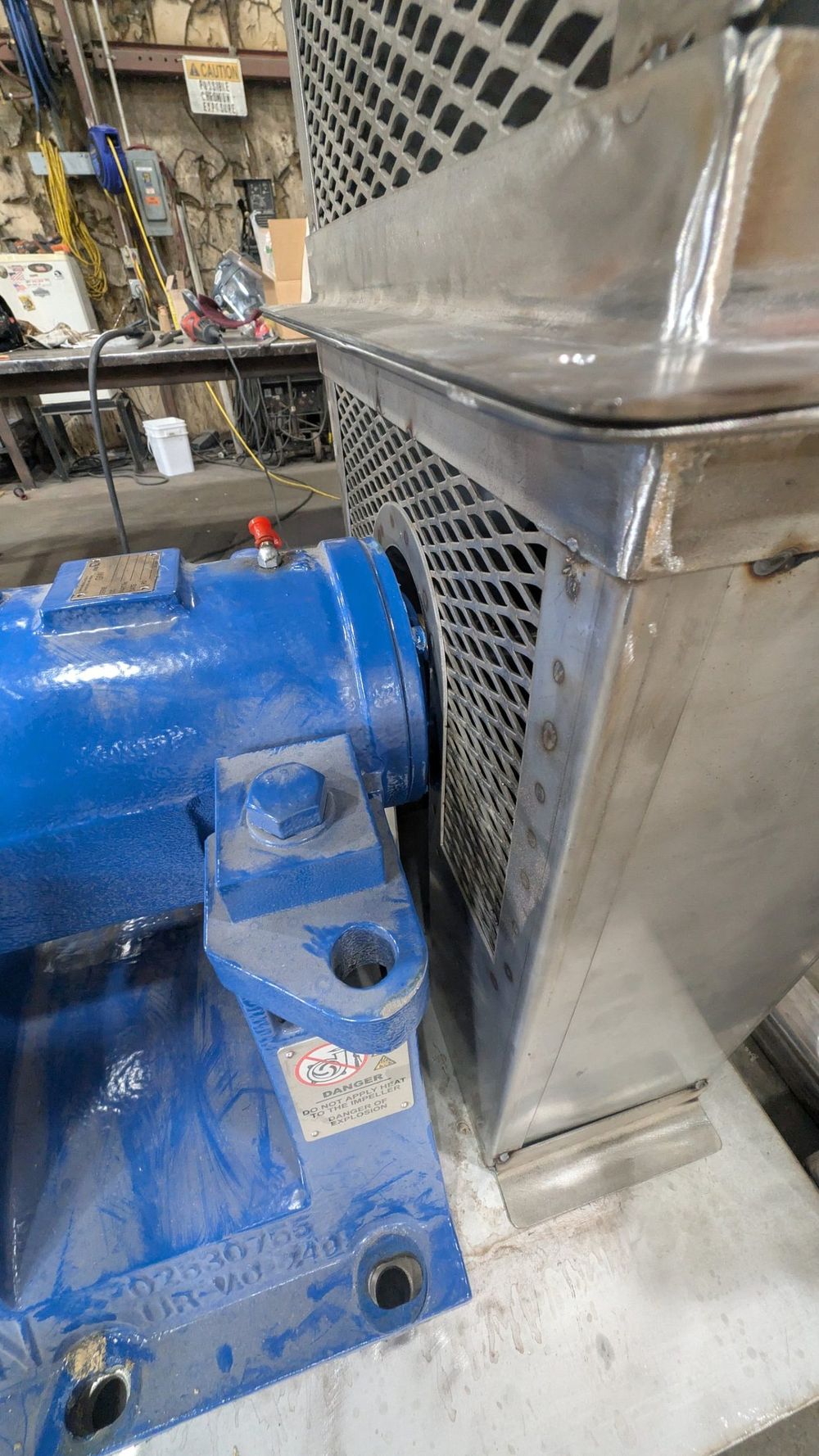
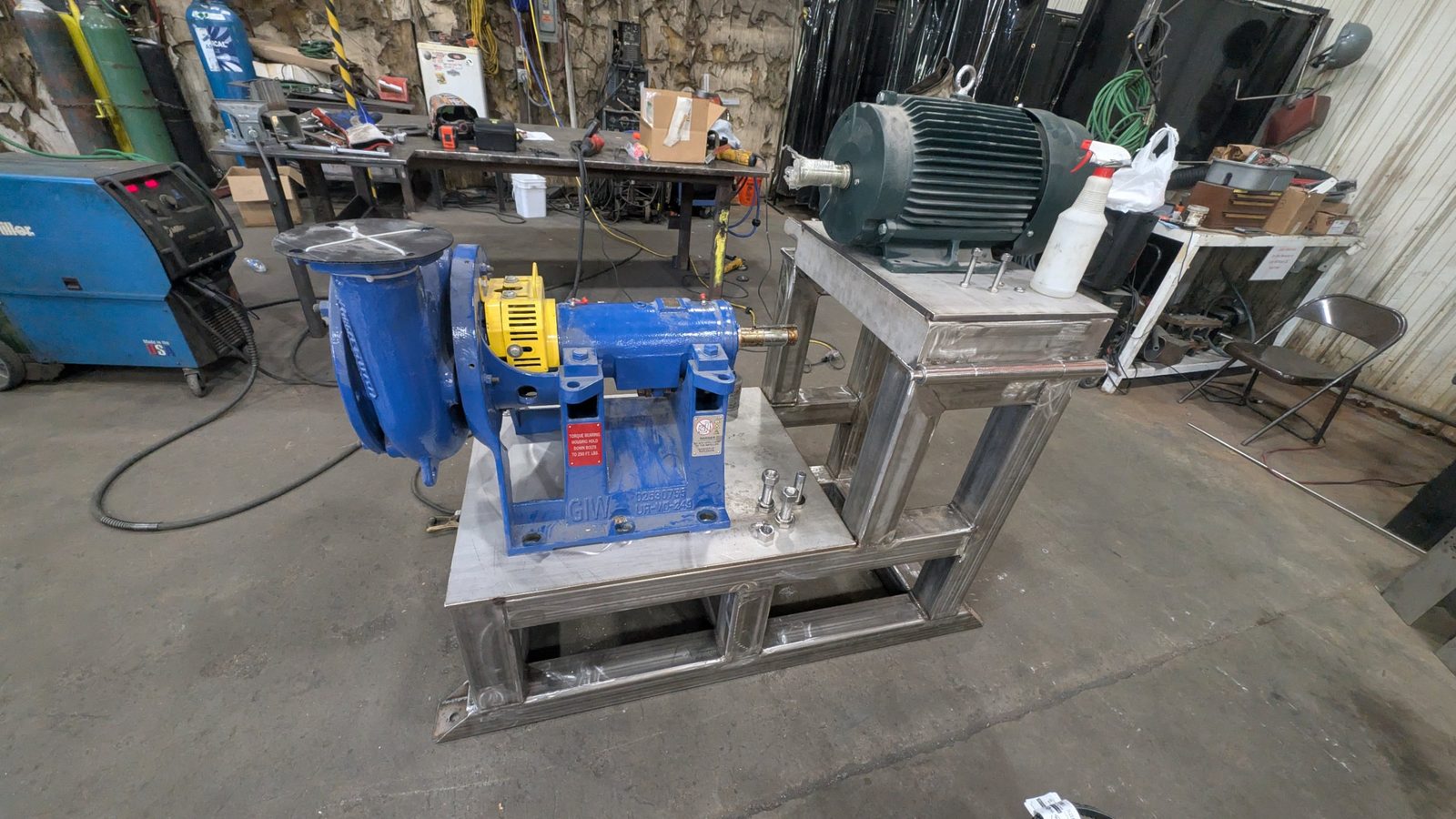
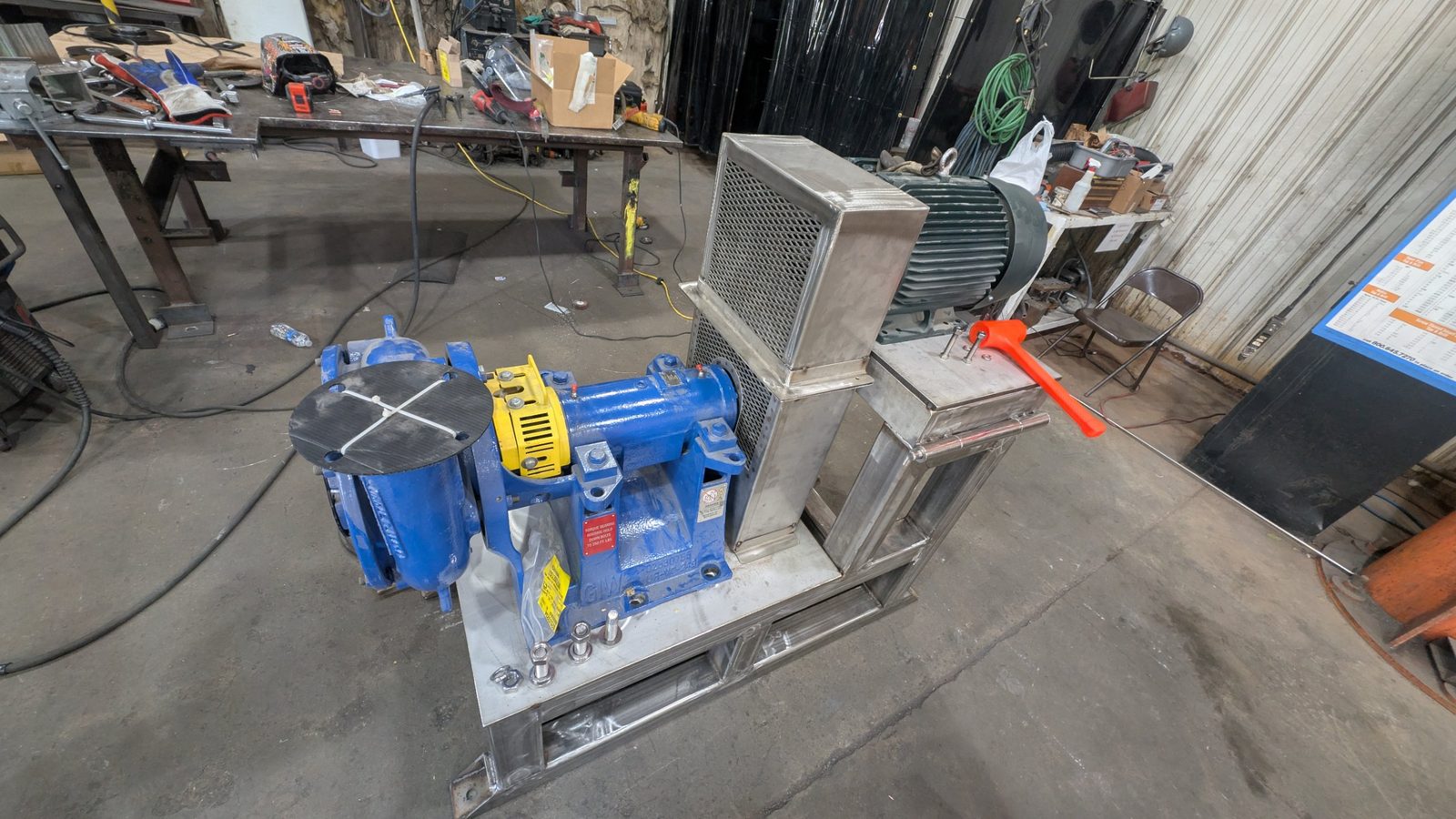
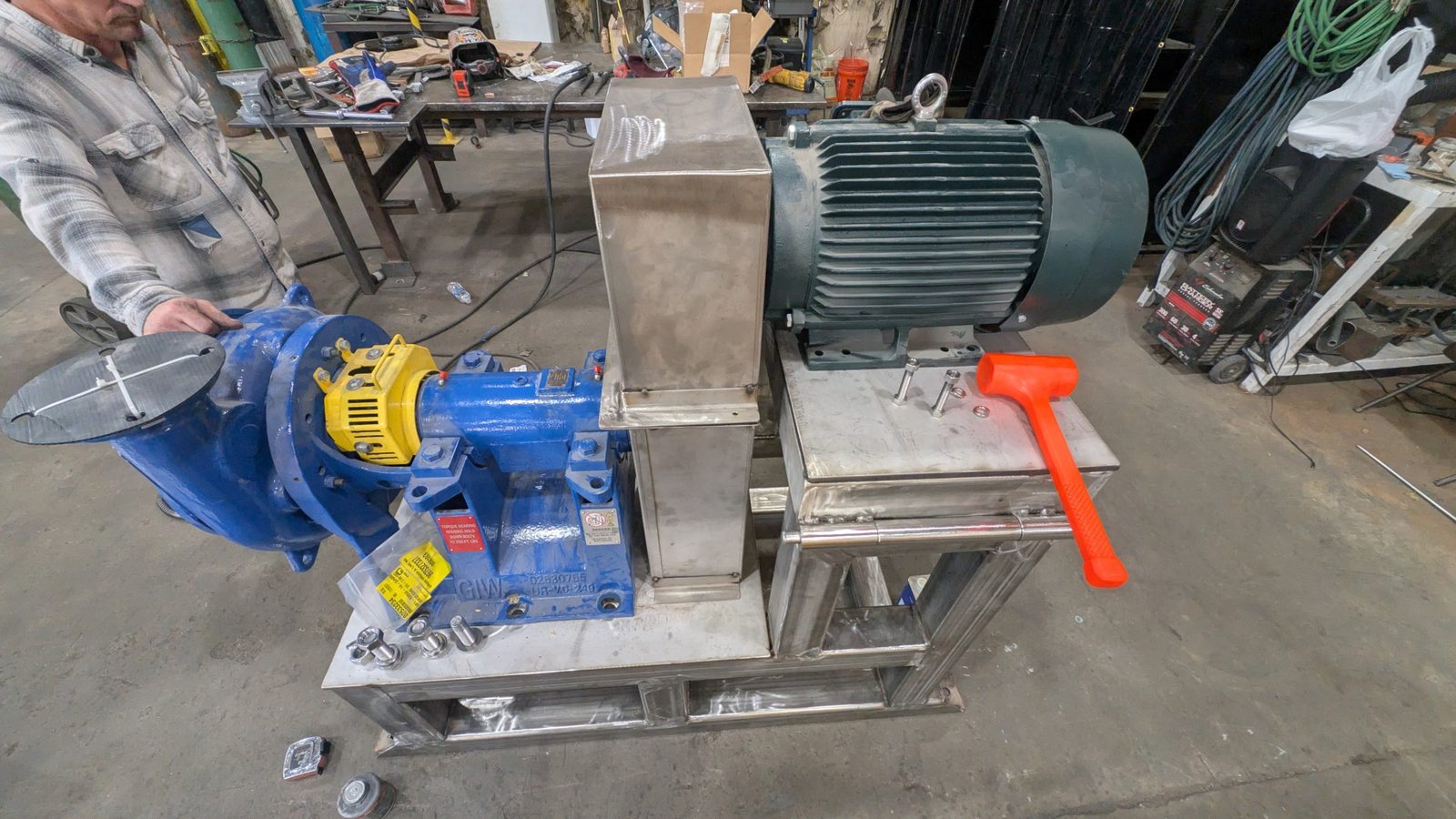
The pump sits low, on the main deck. The motor sits behind and above it, on a raised platform of its own, driving across the gap by belt. Nothing is stacked on anything.
Splitting them does more than clear the lift path. It puts the motor up out of washdown and floor spray, it opens the pump up on every side for a wrench, and it lets the belt drive be tensioned and guarded as its own assembly instead of being buried in the middle of a stack.
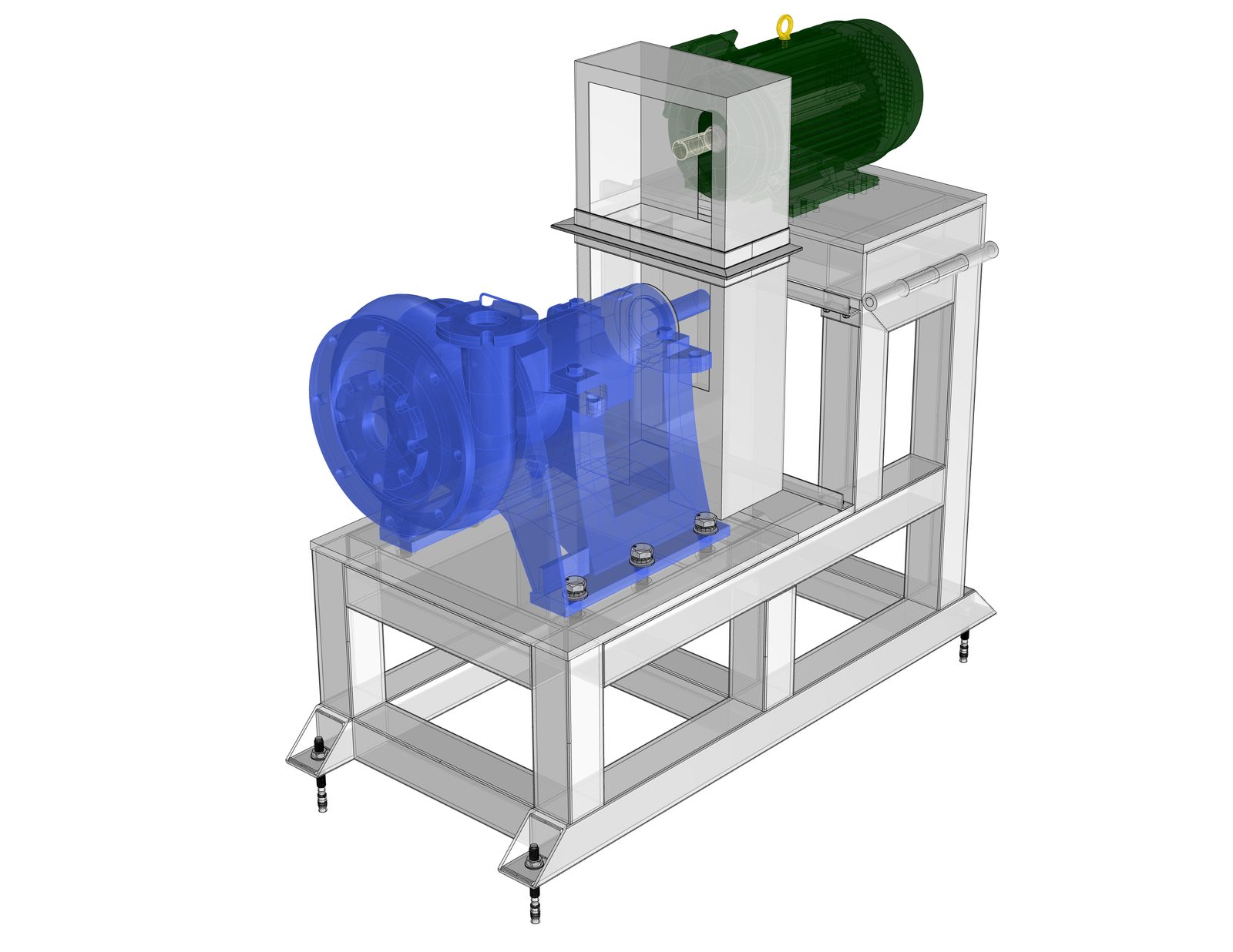
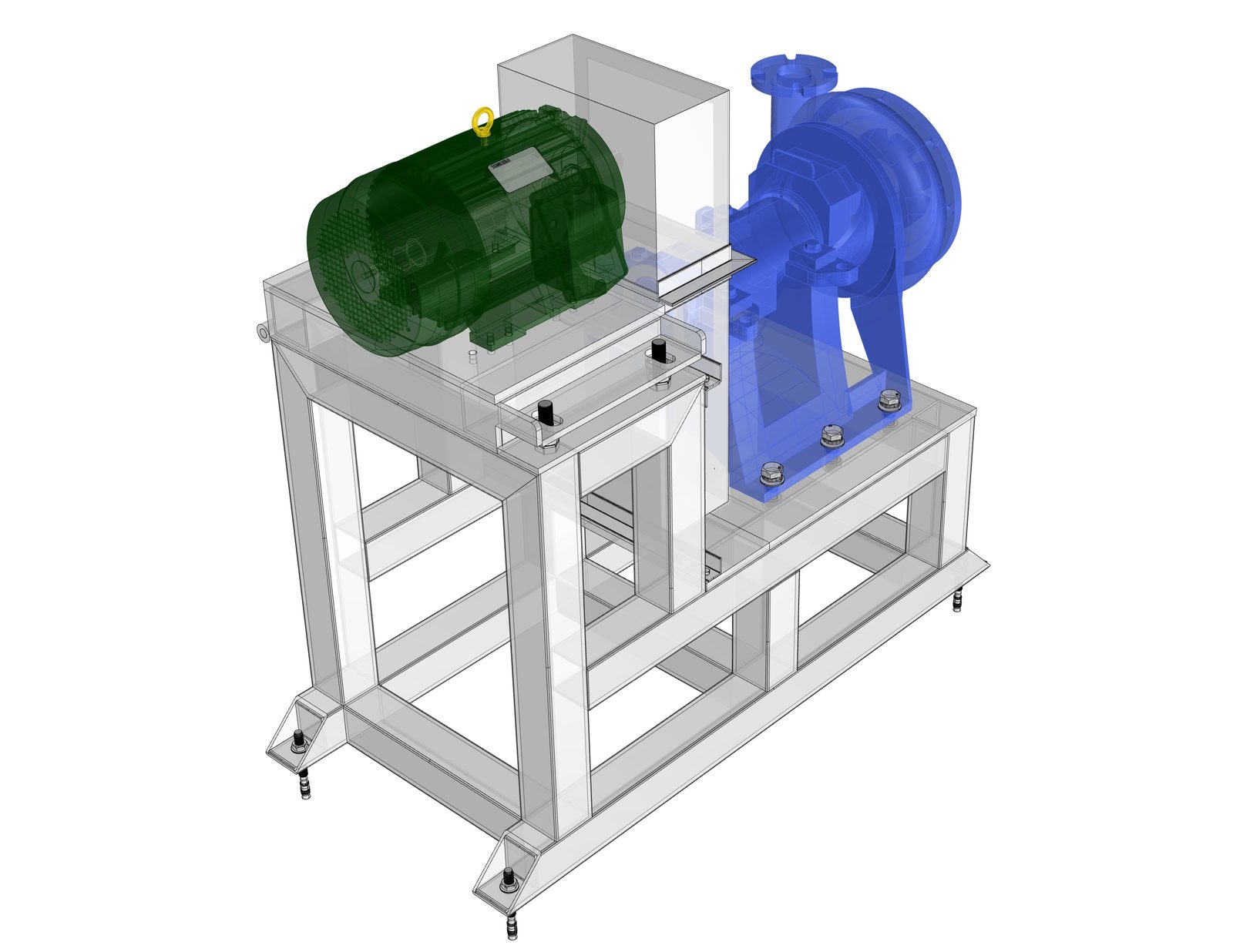
It disassembles in the order the work happens
Guard off. Belt off. Then the pump, straight up, with clear air above it. The motor never has to move, and it never has to be re-aligned because it was never disturbed.
If the motor is what needs attention instead, it comes off as a unit with its own sub-plate, leaving the pump bolted down and the piping untouched.
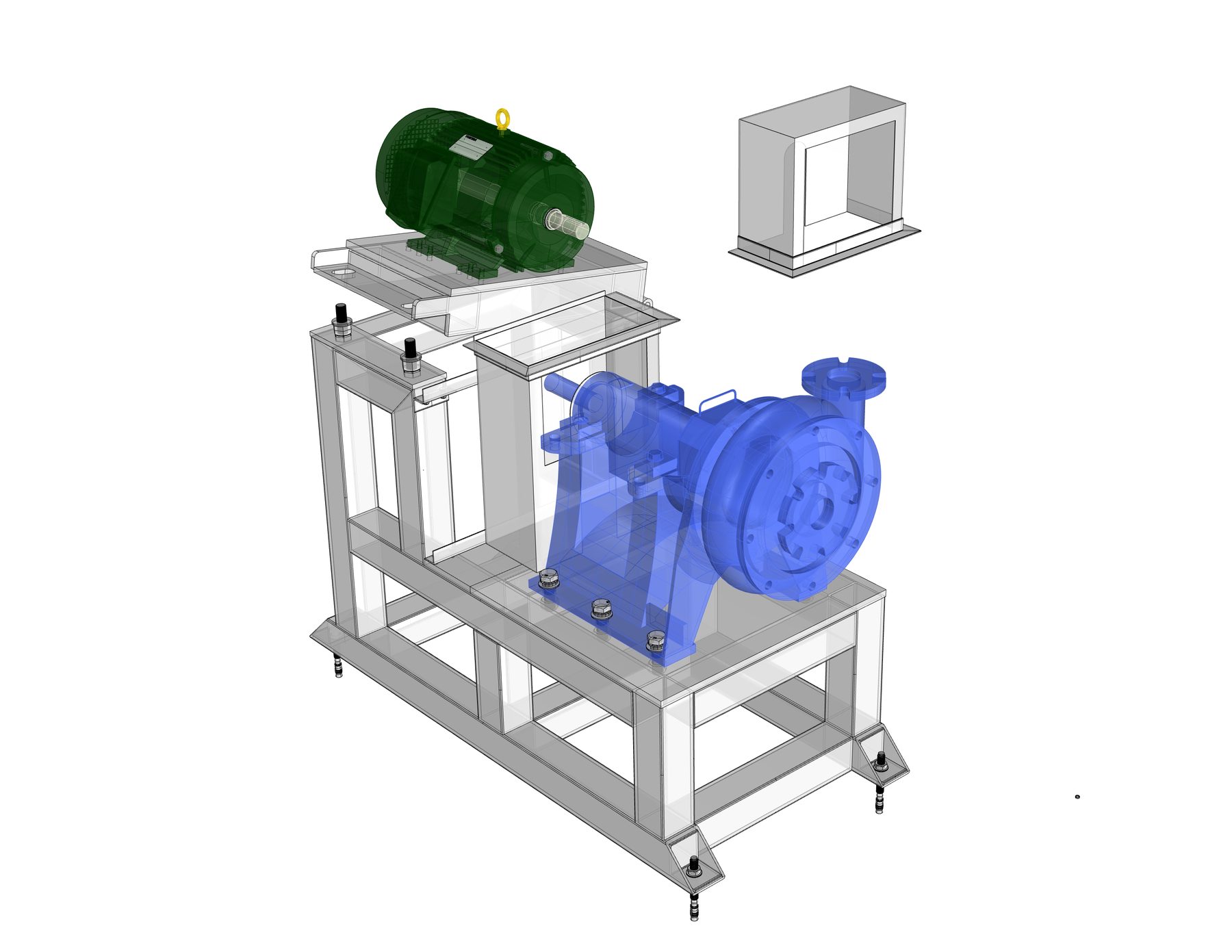
Stainless all the way through, guard included
Frame, decks, motor sub-plate, guard and hardware are all stainless. Putting a carbon steel guard on a stainless stand would have reintroduced the original failure on the one part people take off and put back the most.
The guard is a bolted enclosure, not a welded box — expanded mesh on the sides so the drive stays visible and ventilated, formed solid across the top where things fall. It lifts off for a belt change and goes back on with the same fasteners.
Feet are gusseted base plates drilled for concrete anchors, so the stand is fixed to the floor and holds its alignment under load.
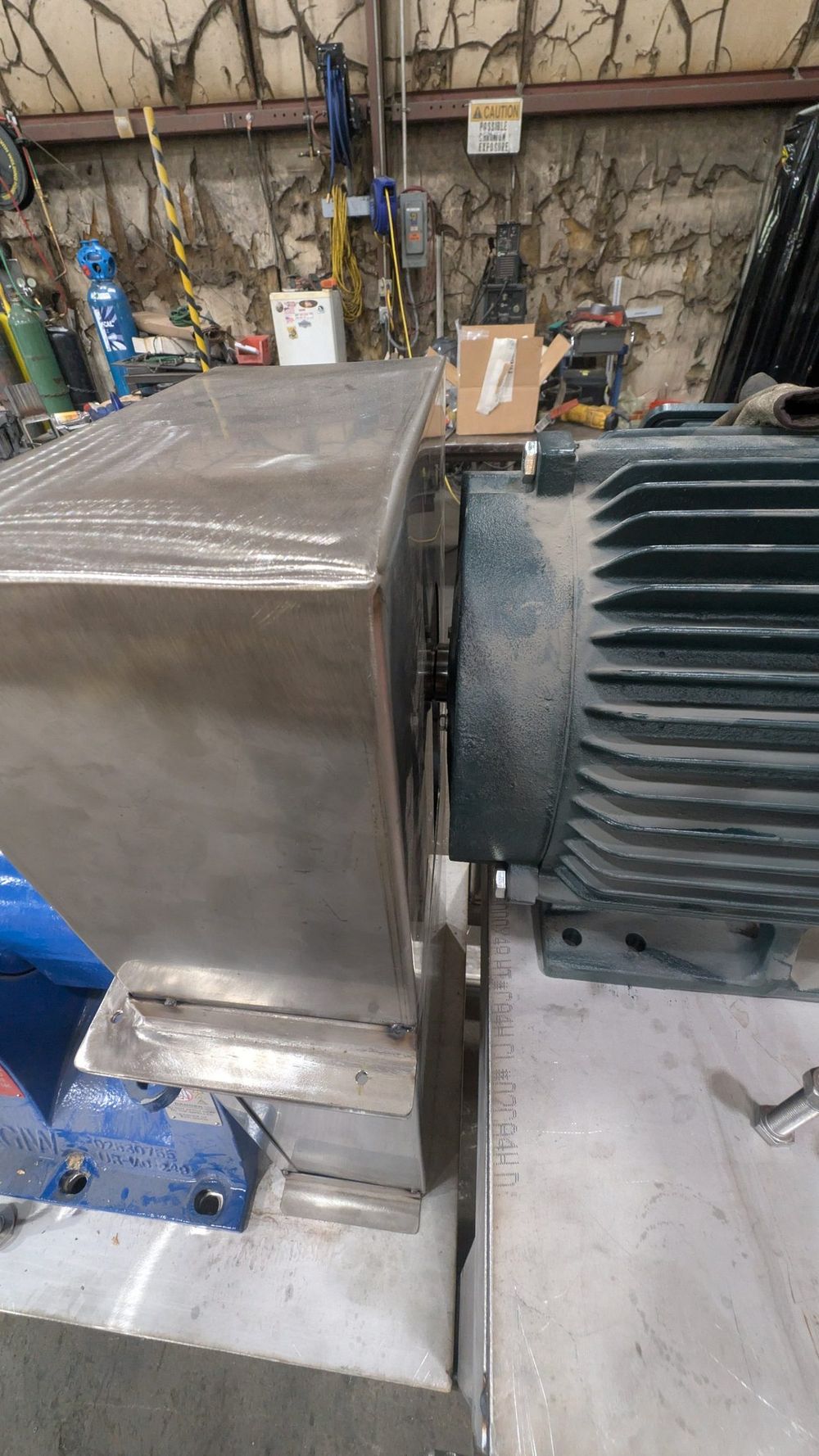
Every part, cut to length and ready to fit
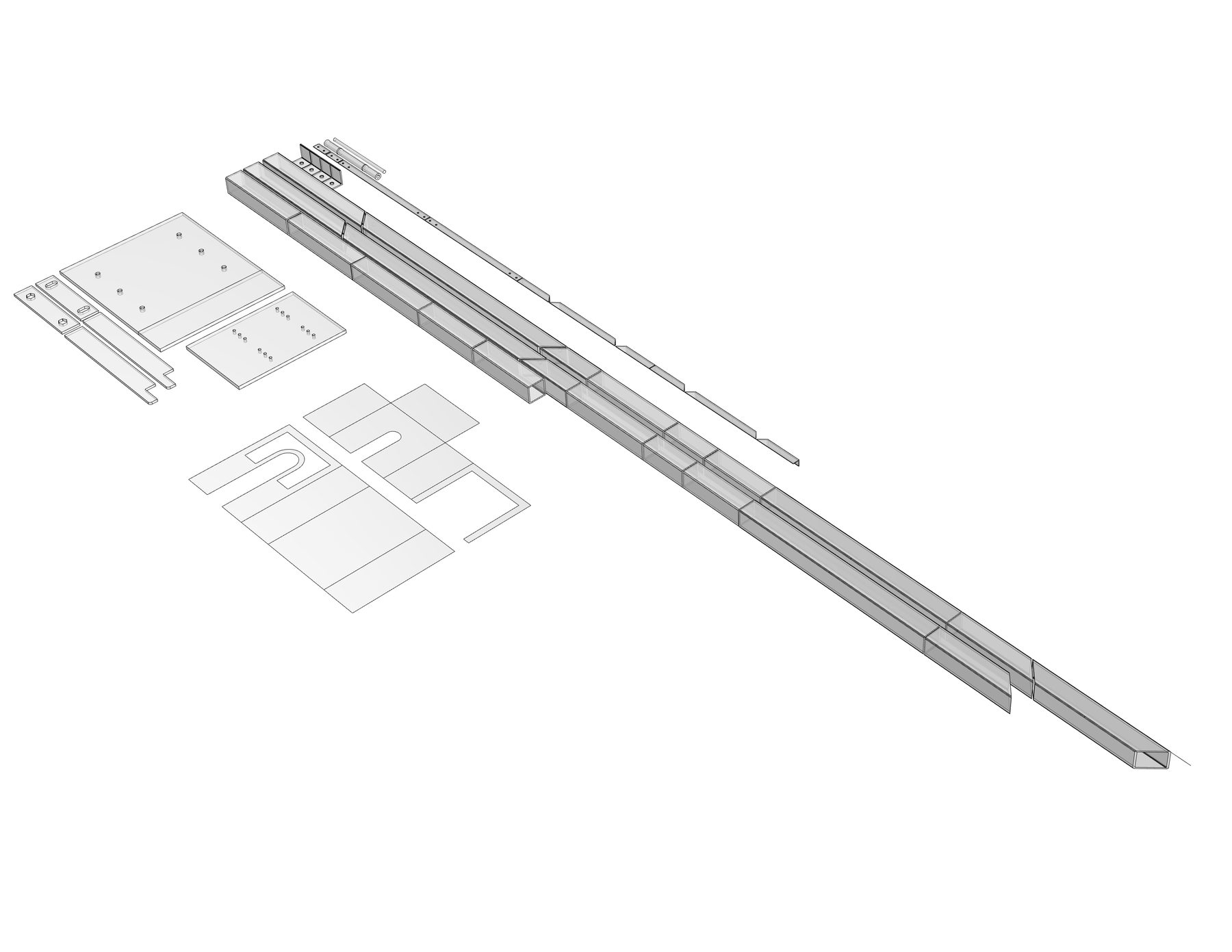
The stand breaks down into plate and rectangular tube. Tube is cut to length with the copes and end treatments already in the file; plate parts are profiled with their hole patterns, including the shaft openings in the guard panels.
That is what gets handed over — a set a fabricator can take straight to the table without redrawing anything or working out what goes where.
- Client
- Industrial Manufacturing · Albany, GA
- Site
- Pulp facility
- Role
- Design only · fabrication and installation by others
- Equipment
- GIW slurry pump · TEFC motor, belt driven
- Problem
- Carbon steel stand corroding; motor stacked over pump blocking removal
- Result
- Pump removable without disturbing the motor; stainless throughout
- Material
- Stainless plate and rectangular tube
- Assembly
- Welded frame · bolted guard · anchored to floor
- Drive
- Belt, tensioned by jack bolts on the motor sub-plate
- Software
- Rhino 3D
- Delivered
- 3D model, shop drawings, cut files, hardware schedule
Got something like this?
A phone call and a few photos is usually enough for me to tell you whether it's something I can help with.